Combining strength and flexibility in the division machinery
How can the structures that pull chromosomes stay strong yet adapt?
How it works
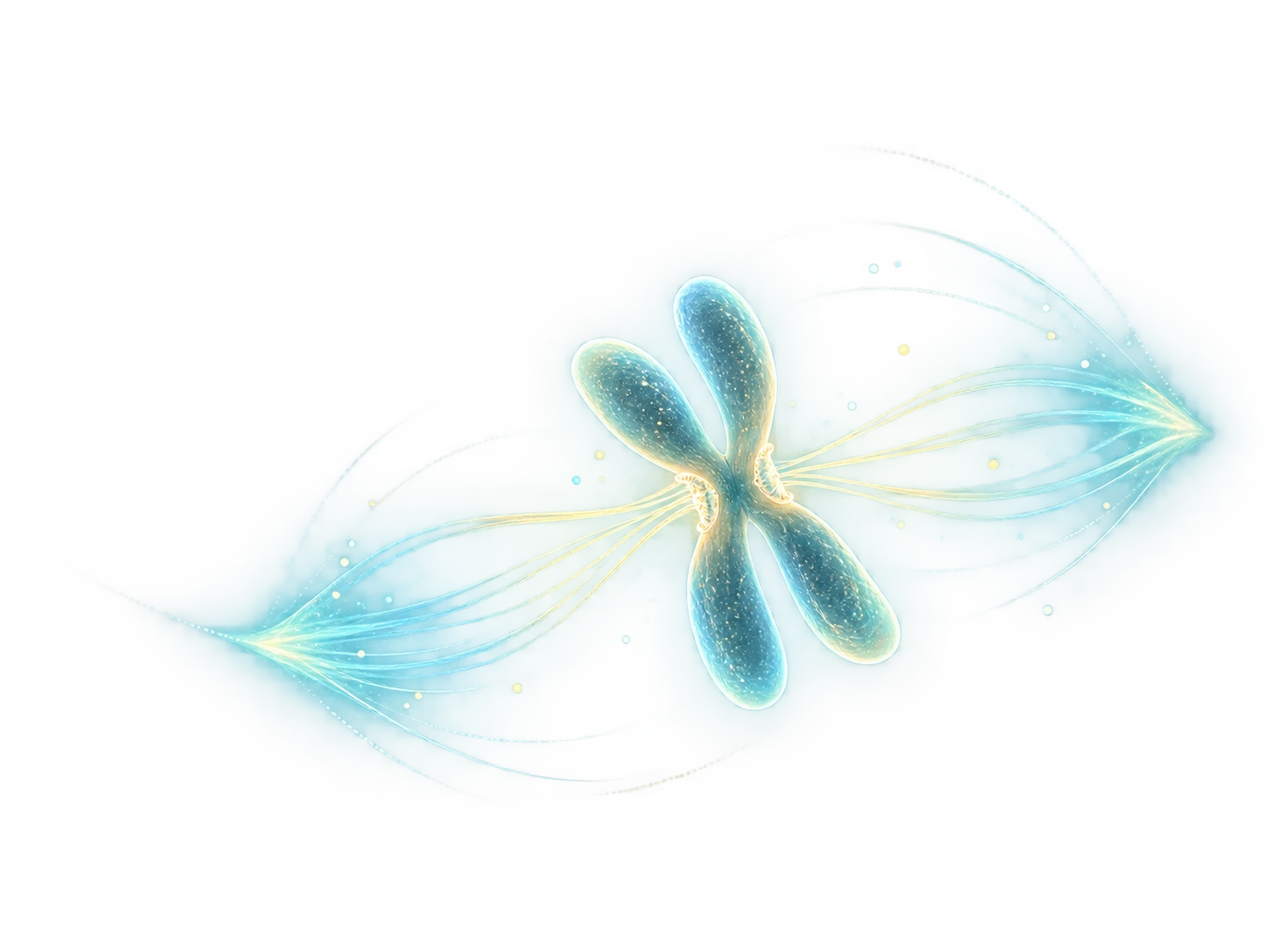
During cell division, thin fibers pull on chromosomes while bearing mechanical forces. The fibers must be strong enough to work reliably, yet flexible enough to grow, shrink and reorganize. We ask how these properties arise from interactions between molecules.
These fibers are microtubules, built from many copies of a protein called tubulin. Microtubules constantly grow and shrink, and their stability depends in part on how neighboring tubulin molecules hold together.
We compare different types of tubulin, with and without Taxol, a drug that stabilizes microtubules. Molecular simulations allow us to examine how freely the molecules move and how strongly neighboring molecules hold together. This may help explain why microtubule stability depends on protein composition and drug binding.
What we want to learn next
Ongoing research / hypothesisThese calculations do not directly measure failures of chromosome segregation. A longer-term goal is to connect molecular binding strength to the behavior of entire microtubules and the division machinery.
Related publications & press releases
No directly matching public paper is listed yet.