Detecting and correcting wrong chromosome attachments
How can a cell release incorrect attachments while keeping correct ones?
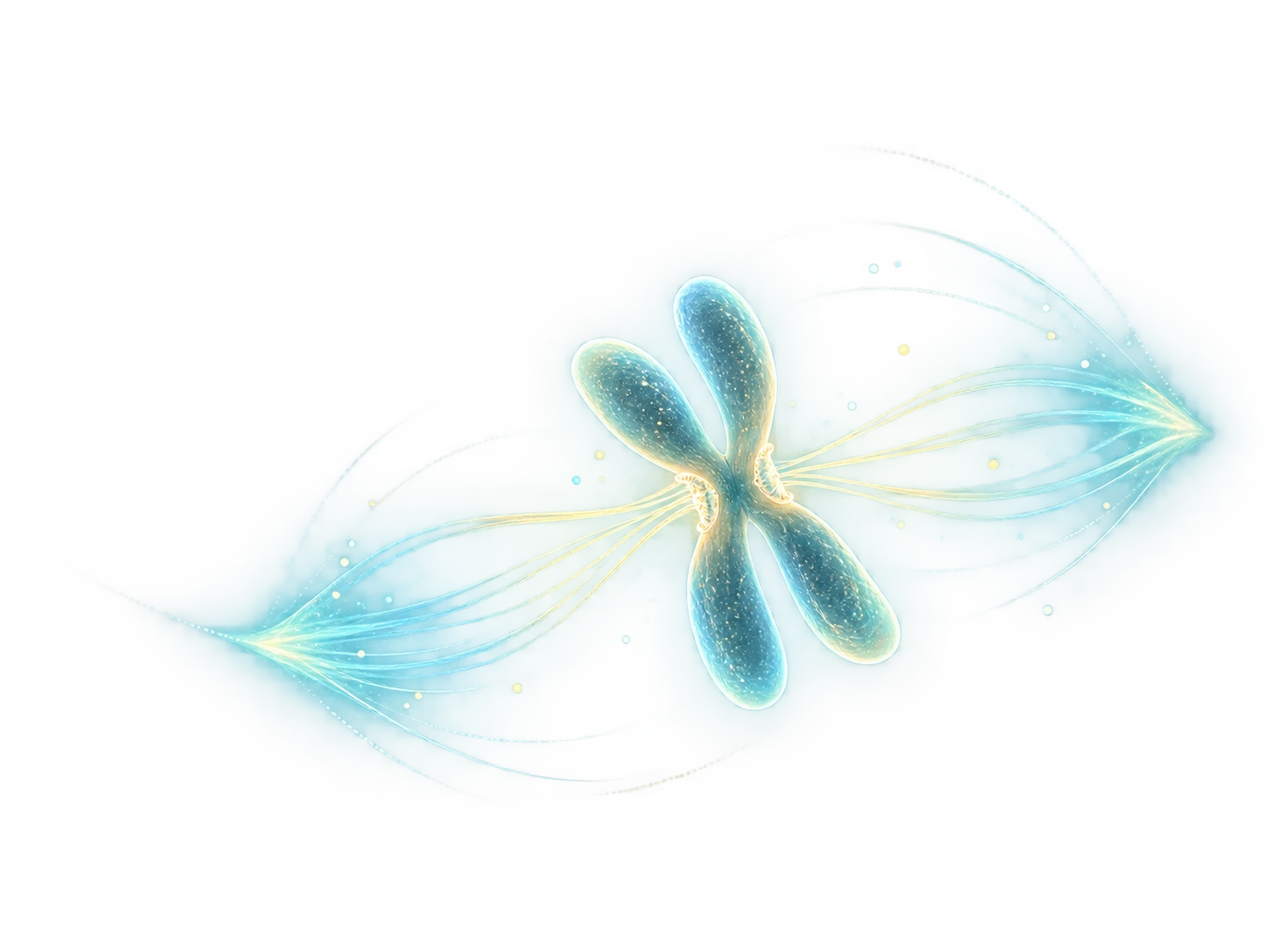
How it works
During cell division, a chromosome can attach to the pulling fibers in the wrong direction. If the cell proceeds without correcting that connection, the two new cells may receive the wrong number of chromosomes. Cells therefore need a system that removes mistaken attachments and allows them to form again.
One key regulator is the chromosome passenger complex, or CPC, which includes an enzyme called Aurora B. What matters is not only whether the enzyme is active but also where it is positioned relative to its targets.
We study how the CPC changes between folded and extended shapes. In ongoing simulations and experiments, we ask whether binding to another protein, HP1, makes extended shapes more likely and changes which targets the enzyme can reach.
What we want to learn next
Ongoing research / hypothesisAn extended CPC is not, by itself, evidence that an attachment error was corrected. We must still connect structural changes to enzyme activity and accurate segregation.
Related publications & press releases
No directly matching public paper is listed yet.