How lipids enter and leave a transport bridge
What controls lipid entry and exit at each end of a bridge?
How it works
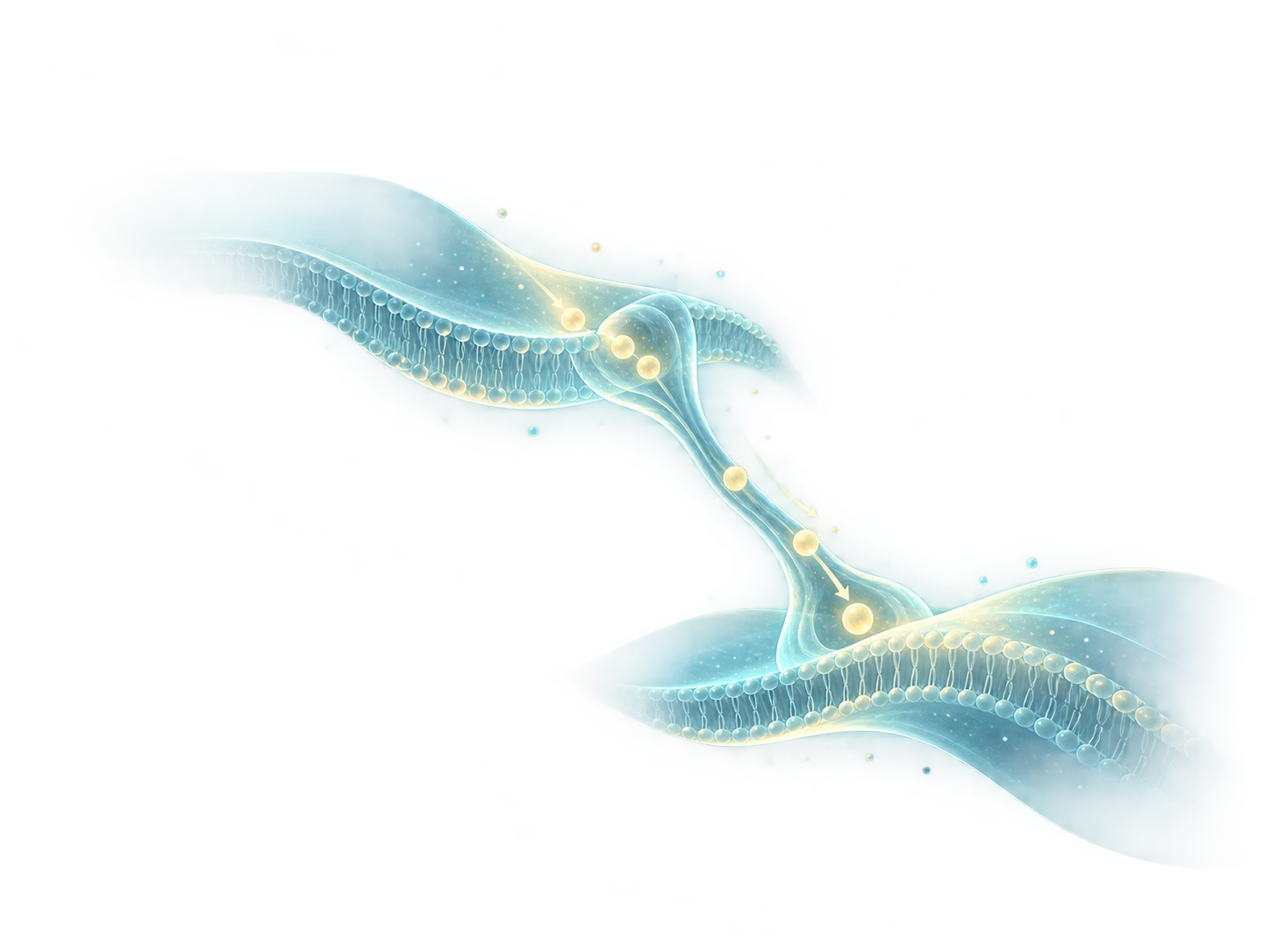
A bridge between two membranes is useful only if lipids can enter it and leave at the other end. We investigate the entire journey: uptake from one membrane, movement through a protein and release into another membrane.
VPS13 contains a long groove that may shelter the water-repelling parts of lipids as they move between membranes. However, the presence of a groove alone does not tell us which way lipids travel or how fast they move.
The shapes of the entrance and exit, the way the protein touches each membrane and the number of lipids already inside may all matter. Even if lipids move quickly along the groove, release at the far end may still limit transport. We examine these steps in molecular simulations.
What we want to learn next
Ongoing research / hypothesisWe will compare different membrane compositions and protein shapes to identify potential bottlenecks. Transport direction must also be studied in the context of the two connected membranes, rather than inferred from structure alone.
Related publications & press releases
No directly matching public paper is listed yet.