Passing lipids through a bridge between membranes
How can lipids move directly from one membrane to another?
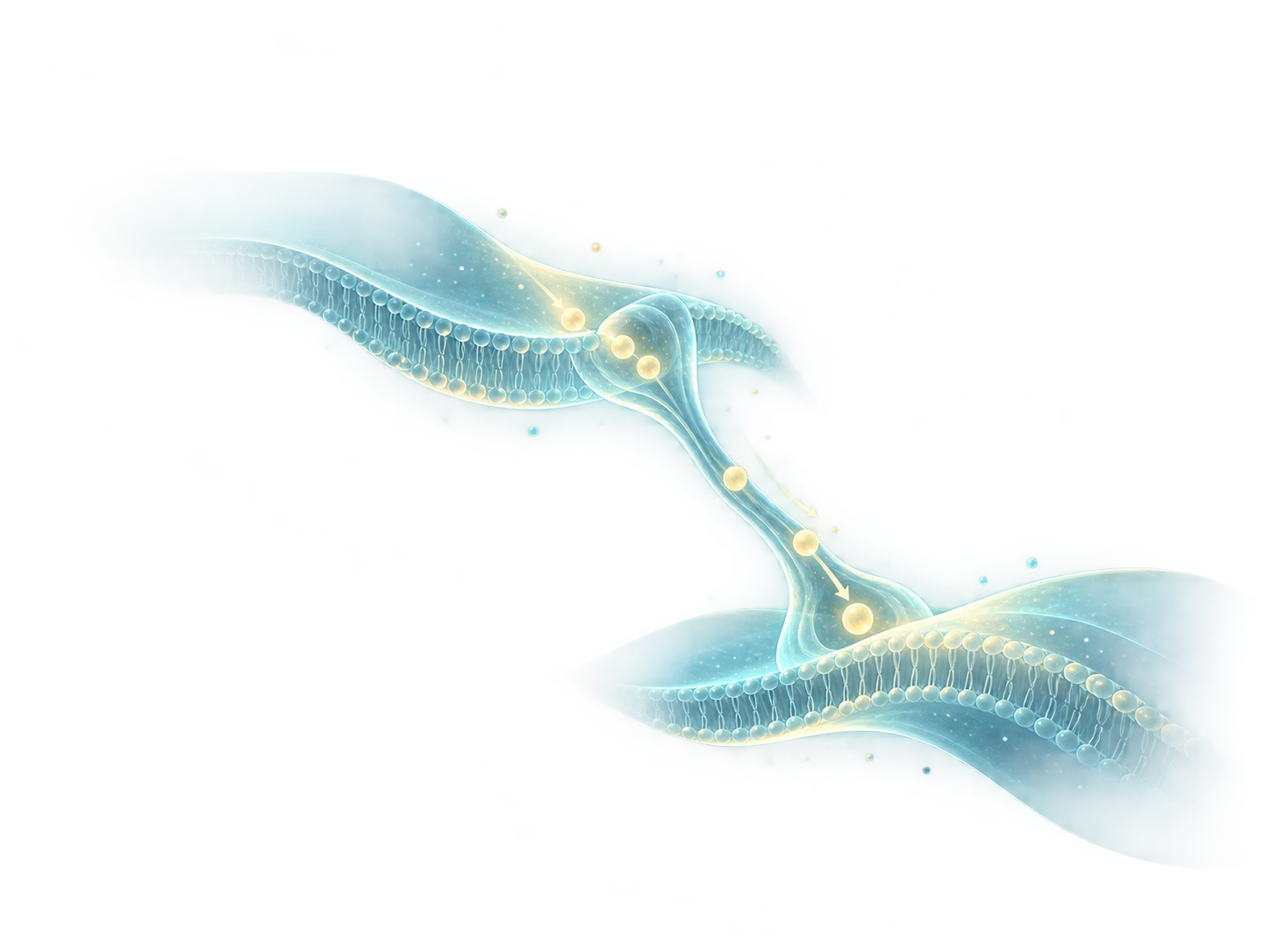
How it works
Some proteins span the narrow gap between two membranes. Like bridges, they can provide a route for lipids—the materials that membranes are made from—to pass from one side to the other. We study how lipids move through these routes.
Atg2, a protein involved in autophagosome formation, has a long groove inside its structure. This groove may help move lipids while keeping their water-repelling parts sheltered. Molecular simulations allow us to examine where lipids enter, how they pass through the protein and how they approach the receiving membrane.
The transport pathway may also be regulated. In our preprint, we combined simulations with lipid-transfer measurements to investigate how phosphorylation—the addition of a small chemical group by Atg1—changes access to the pathway.
What we want to learn next
Preprint / ongoing verificationBy comparing phosphorylated and unphosphorylated Atg2, with and without partner proteins, we aim to identify which steps in lipid movement can be controlled.
Related publications & press releases
The preprint investigates how phosphorylation regulates the movement of lipids through a membrane-bridging protein.