Coordinating lipid exchange where membranes meet
How do neighboring proteins work together where two membranes approach?
How it works
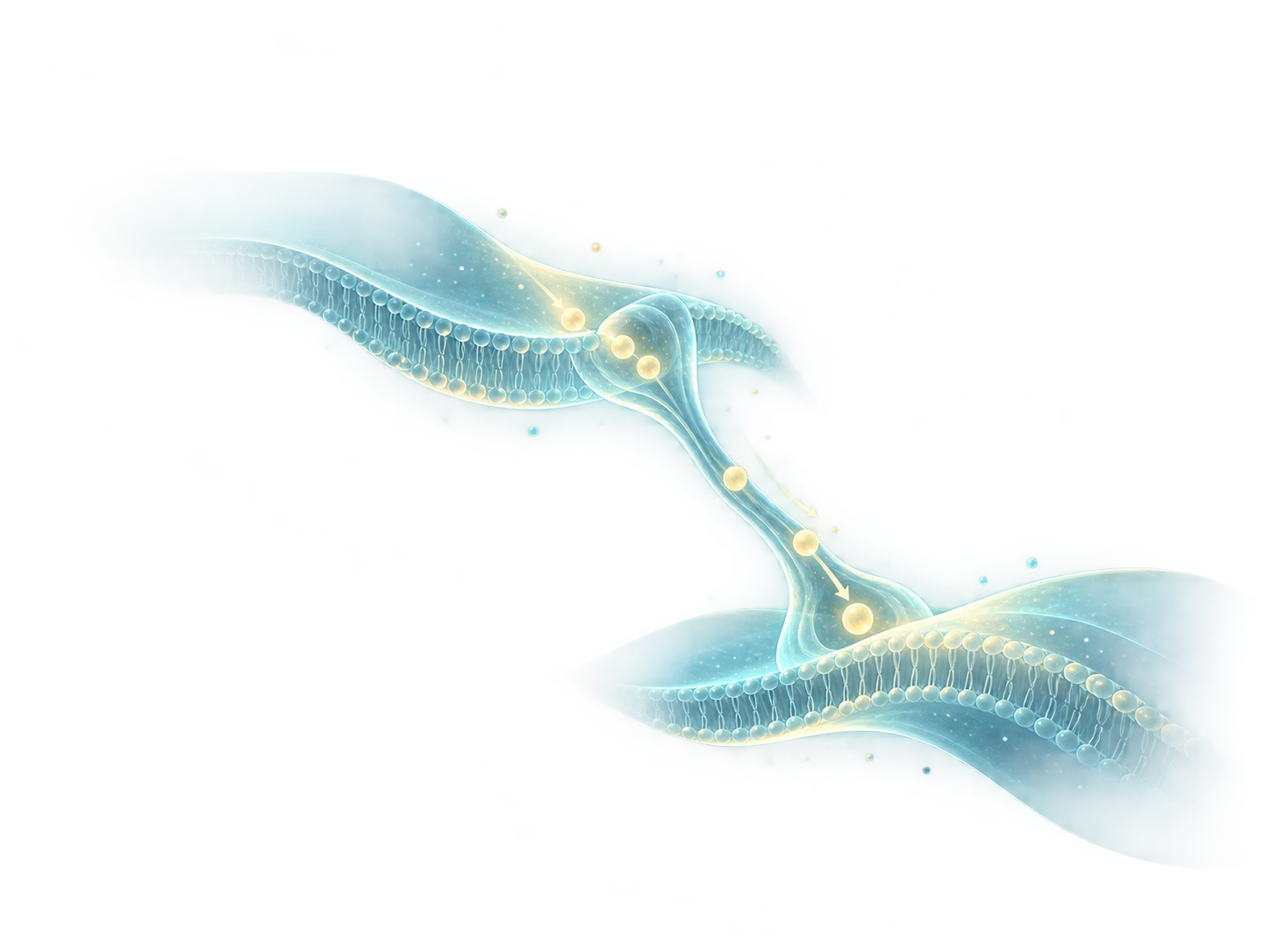
Inside a cell, different membranes can come very close without fusing. These membrane contact sites may allow lipids to be exchanged while each membrane keeps its own composition and function.
BLTP2 is a candidate lipid transporter at contacts between the endoplasmic reticulum and the cell surface. Because these membranes contain different mixtures of lipids, the identity and amount of lipid transferred may affect how the cell surface behaves. We investigate how BLTP2 attaches to membranes and how transport may occur.
At sites where two cellular membranes come close together, a lipid transporter may not work alone. Membrane-remodeling proteins, scramblases that move lipids between the two sides of a membrane, and other types of lipid-transfer proteins may work together to influence membrane spacing and lipid flow. We are investigating these possible interactions with molecular simulations.
What we want to learn next
Ongoing research / hypothesisAn important next step is to distinguish lipids moved directly by BLTP2 from changes caused indirectly through partner proteins. The proposed functions of these assemblies are still being tested.
Related publications & press releases
No directly matching public paper is listed yet.