How chromosome shape affects separation
Why does the shape of a chromosome change how easily it separates?
How it works
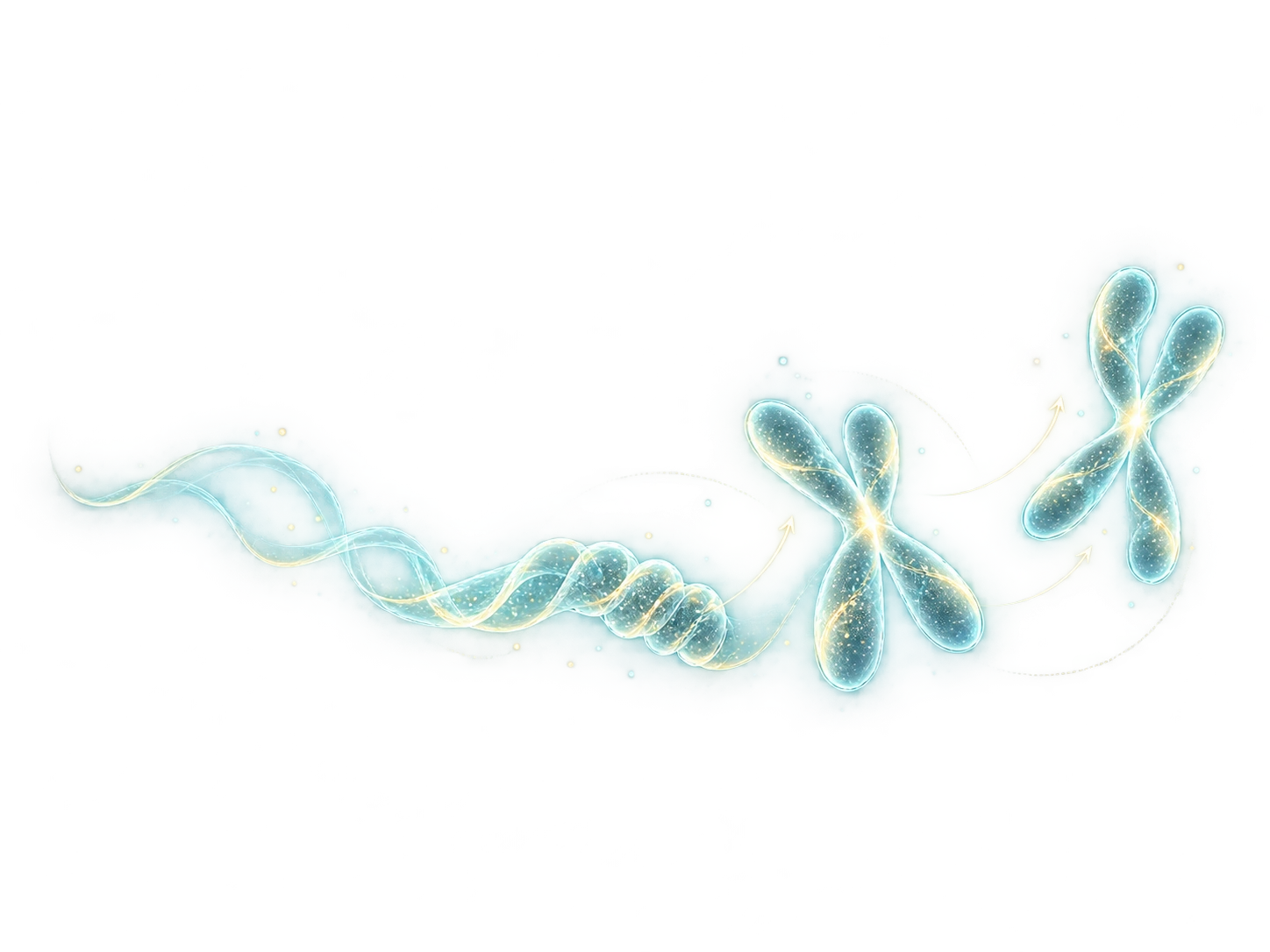
DNA is an extraordinarily long, thread-like molecule. During cell division, copies must be separated accurately into two new cells. But like tangled threads, chromosomes can be difficult to pull apart depending on their shape. We ask how chromosome shape affects separation.
Chromosomes obey physical constraints: two parts of a molecule cannot occupy exactly the same space. We model chromosomes as long polymer chains and calculate how they separate when we change their shape, length and crowding.
Our 2016 study showed that changing the shape of these entangled chains can change how quickly they separate. Shape is therefore not just an appearance; it can influence a process essential to accurate inheritance.
What we want to learn next
Published researchIn living cells, proteins also reshape and organize chromosomes. Connecting these molecular actions with polymer physics is an important next step.
Related publications & press releases
A polymer model connects the shape of intertwined chromosomes with how quickly they separate.