Folding long DNA into chromosomes that can separate
How do cells compact long DNA without preventing its separation?
How it works
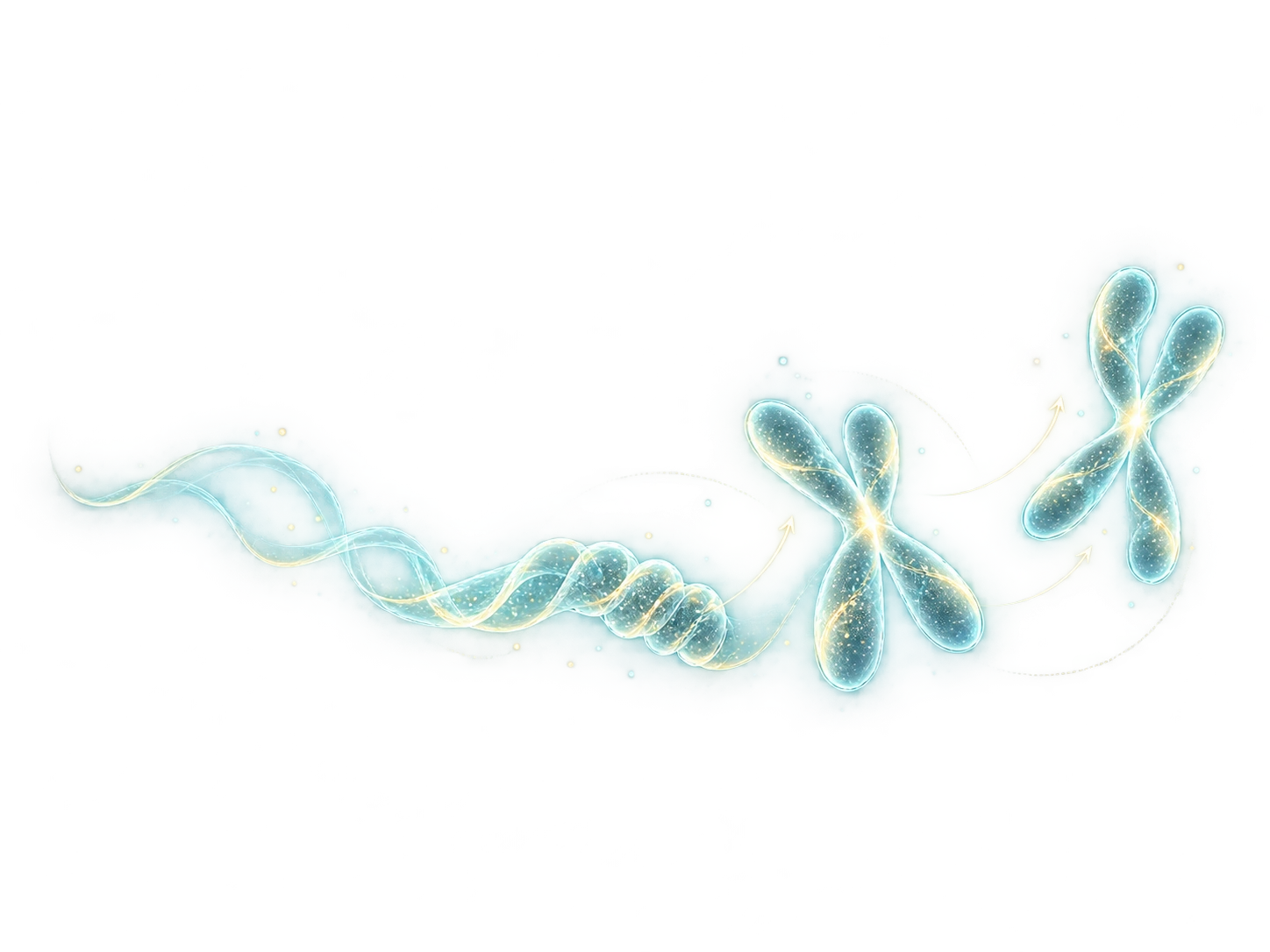
DNA is so long that it would become tangled during cell division if left unorganized. Cells package DNA into compact chromosomes that can be separated into two new cells. We study how this large change in shape arises.
One protein complex involved is condensin. Condensin acts locally on DNA and chromatin, but many local actions together change the form of an entire chromosome. Mathematical models let us ask how these small-scale effects combine.
In 2018, we developed a polymer model incorporating the actions of condensin to study chromosome formation and subsequent separation. The approach captures how local constraints affect a whole chromosome without trying to reproduce every atom of every protein.
What we want to learn next
Published researchThe next step is to compare the model with experiments that alter condensin, identifying which modeled actions correspond to its specific molecular functions.
Related publications & press releases
Mathematical modeling describes how chromosome-shaping factors contribute to formation and separation of chromosomes.
Measurements of individual nucleosomes clarify how condensin activity and contacts within chromatin shape mitotic chromosomes.